
Be sure to read How to Start Your Own Expat Avventura first to get an overview of the planning process. Once we decided where we wanted to move and that we were going to do it on our own rather than being relocated through work, we identified the following questions as ones we felt were important to answer in order to get us settled and comfortable in Italy.
Please keep in mind as you read this that these are our personal decisions. They are not necessarily right or wrong for you. We do not claim to be experts but we have certainly learned a lot along the way. There are so many details that need to be considered. It’s a bit overwhelming, but we found making a list and breaking it down really helped ease some of the stress. We tried to view the process as a way to get to learn about Italy and the people, rather than being annoyed by the bureaucracy or the tedium. When that fails, always remember that the payoff is so worth all of the effort.
- What is the visa application process?
- What are the requirements after arriving in Italy and can we work there?
- How will we learn the Italian language?
- Do we rent our house or sell it?
- Do we store our belongings/furniture or move them with us?
- Where will we live?
- What school will the kids attend?
- What activities will the kids do?
- Should we bring our car or buy or lease when we get there? And do I need a special driving license?
- What’s the best way to transport the dogs?
- European medical care is supposedly free, do we need insurance?
- Do we need Italian credit cards and bank accounts?
- Which providers should we use for our cell phones, internet, tv, utilities, and a VPN?
- How do we pay taxes?
- Do we need to maintain contact information (address, cell phone) for the US?
1. What is the visa application process?
This was perhaps the most complicated part of the entire process because there aren’t great resources to help and it’s the one that we had the least control over. We researched as much as possible, leaning heavily on blog posts and other people’s experiences.
For Italy (and the rest of the Schengen area), a visa is required to stay more than 90 days out of every 180 days. If you’re retired and want to go back and forth to your home country or travel the world, that’s an option, but we were planning on relocating. So the next step was to figure out which type of visa we could obtain.
Without a company to sponsor us we knew a work visa would be challenging to obtain and more importantly, we preferred to focus on la dolce vita and not work full-time. Our school days are behind us, so a student visa was out. Au pairs also have a special status, but we’ve got our hands full with our own kids already.
Lynn’s dad was born and raised in Greece and maintains his citizenship, so we figured that would be our way into another EU country. Lynn does qualify for Greek citizenship and that would work however, Greece’s bureaucracy is even slower than Italy’s. All her family events (marriages and births) needed to be translated and submitted for Apostille stamps and then registered in Greece, along with lots of other paperwork in order for her to apply. Plus lots of other issues, like the two month period where they were upgrading their computer systems and couldn’t move anything forward. Or that they didn’t like how her dad translated his name to English and he needed to prove he was the same person. Or that they didn’t like that Lynn changed her middle name to her maiden name after we got married to maintain her Greek heritage, but it confused them that a Greek family name was now one of her given names and forced her to go back to the middle name her parents gave her. Long story short, we started her application for citizenship two years before we planned to leave for Italy and realized that every time we jump through hoops to satisfy a question they pose that there will be another one. Even with the help of an immigration lawyer, it is now nearly 5 years later and no Greek passport. Maybe one day?!
Lynn is also of Italian descent since her great-grandparents were born near Benevento, so we looked to see if that would be an option since Greece doesn’t seem to want her. Unfortunately, since her grandmother was number 6 of 7 siblings, her great-grandparents had already become naturalized US citizens at the time of her grandmother’s birth which meant the Italian citizenship chain had been broken and another dead end in our visa treasure hunt.
That is when we started to read about the elective residence visa for Italy. It is designed for retired people with a pension who would like to live in Italy permanently and have no need for work. This was not exactly us, since we couldn’t live off our savings forever, but the idea was right since we wouldn’t be putting a strain on the Italian social system and we would be contributing to the local economy without taking a job from an Italian.
The visa application process is not for the faint of heart. It is complicated, emotionally draining, virtually impossible to get any help from a real person, and appears to be highly variable from consulate to consulate. In the end, I believe we were ultimately successful because of our extreme attention to detail and organization.
Find your local consulate and make an appointment through their online system. We tried to walk-in to the Chicago office one day just to ask questions and we were denied. We then made an appointment to go through our questions before applying, but they don’t view that as one of their services so they told us to come back when we were ready to apply. This required a giant leap of faith since you can only apply at most two months before you want the visa and we had to start the moving process – find an apartment, apply to schools, organize movers, sell our house, oh yeah, and quit our jobs – all before we actually had a visa. For many weeks we had no response from the consulate and a week before our flight we walked into the office where they kindly informed us our application had been rejected. Obviously, we were devastated and a complete mess. Gratefully they were at least kind enough to help us resolve the issue in our application and approve us quickly so that we could make our flight and start our adventure. We wrote more about the traumatic experience here.
Anyways, you’ll be fine. Here’s our list of what we needed to apply:
- Italian Elective Residence Visa Application Form: Find the website of your Italian Consulate (for us it was Chicago) and obtain the visa application form. Complete it, but don’t sign or date it. This must be done in front of the consulate.
- Photos: You need two passport-size photographs on white background
- Passport (original and copy of the picture page): You must have a valid passport that is valid for at least 3 months beyond the end date of your visa. For an elective residence visa, this is one year. It is confusing because it doesn’t mean you can only stay for a year, the visa only gets you into the country there are then separate documents that allow you to stay in the country (see the Permesso di Soggiorno section below).
- Driver’s License or State ID (original plus one copy): as proof of residence in the jurisdiction of the consulate.
- Financial Resources: This is the trickiest and most subjective section. You need to organize all of your financial documents and be able to prove an amount of ongoing income without relying on work. They don’t care if you have millions of dollars in the bank, they want to see regular, monthly deposits of money coming into your account that is unrelated to work income. They say the concern is that if you spend all of that money on day 1 then you’ll need the government’s help, but we’d say we just put all that money into the economy so it should work out. Anyway, if you own a rental property you can use rent you collect, or for retired people, this could be a pension or social security. Since we sold our house rather than renting it out (see below) we didn’t have this, so we set up an annuity account that automatically pays us once monthly from our savings account and provided detailed documentation, along with a letter from our financial advisor as to how the account functioned.
- We could not find any printed statement of how much income we needed to prove. One site said 31,000€ per year for a single person (with 20% additional for a spouse and 5% for each additional dependent). Another said 20% additional for each child.
- We initially applied with an annuity to pay us 3000€/month because we figured with the amount of our savings, it would be enough. However, we’re pretty sure they didn’t even care how much we had in savings, they only wanted proof of more ongoing income. We increased it to 4500€/month and reapplied and were successful.
- It still doesn’t make sense to us, but a steady income stream unrelated to a current job was the most important financial part of the application.
- Marriage and Birth Certificates (original and one copy of each)
- Housing: You must provide evidence that you have a place to stay in Italy, and a hotel or friend’s spare room does not count. Proof of ownership of a house would be the easiest, but they also accept a registered lease. On our first attempt at applying, we tried to show a letter of intent to rent and it was rejected. This was the riskiest part of the process for us. We had to sign a lease (with a large security deposit because we are not employed in Italy) and have the landlords register it with the commune of Torino, all before our visa was approved. We did add a clause in the lease that if our visa was rejected they would return our money.
- Health Insurance: Italy provides free health insurance for all of its residents, but this visa requires you to show proof of private insurance for one year that covers 100% of medical expenses. We have a GeoBlue Xplorer plan which for our family of 5 is around $700 per month and does not cover any health expenses in the US: https://www.geobluetravelinsurance.com/
- Confirmed Flight Reservation: This is another expensive item that we had to buy prior to our visa getting approved to show proof of travel. Travel that wouldn’t really be possible without the visa, so which comes first the chicken or the egg?
- Visa Fee: This varies by consulate, but the one in Chicago only accepted Money Order or Cashier’s checks.
- Return envelope: If you cannot collect your visa in person, you also need a paid return envelope. Check out the requirements of your specific consulate.
Additional resources and sites that were incredibly helpful to us. There are so many individual experiences, so read everything you can!
Dispatches Europe and Italywise
2. What are the requirements after arriving in Italy and can we work there?
Obtaining the visa is the big hurdle, but you’re not done with Italian bureaucracy. After arriving in Italy you are required to submit your paperwork to obtain a permesso di soggiorno (permit to stay) within 8 days. There are different types of permessos that correspond to the different types of visas. For example, we have an elective residence permesso. To obtain the permesso you basically need to complete a form and submit many of the same information (financial resources, health insurance, birth certificates, passports, …) you used for your visa application.
We booked an appointment online with the Patronato Acli to help us with the form. They provide free assistance for a variety of services, including helping foreigners with their permesso di soggiorno applications and language exams. We brought multiple copies of all the documents with us to the meeting, they walked through the application form with us, filled it out, and printed it. We put everything into the envelopes (the adults needed separate applications, and the kids were with Dave). They then told us about the 16€ marca da bollo (tax stamp) we needed to purchase from a tabaccheria. We stuck that on to each application and took the packets to the post office.
At the post office, you give them the envelope and then they print out a receipt with a day and time that you need to go to the immigration department of the Questura office (police office). The first time this appointment was about 3 months from the day we mailed the envelope. Since we stayed in Italy longer than 2 years we needed to renew our permits, and that time the appointment was 5 months later. The receipt from the post office acts as your temporary permesso.
Read the bottom of the receipt carefully since it tells you what to bring to the Questura. You’ll need your documents again along with passport photos, and your kids if you have any (we didn’t realize that the first time and had to make a mad dash to school to get them in the middle of the day). However, you don’t actually get your permesso that day! They’re only confirming that your application was accepted by the national office and to collect your photos. They tell you to come back in a month, but still, you don’t get your permesso. At this appointment they fingerprint you. A couple of weeks later we received a text that the permesso was ready and finally we were able to pick them up. Dave actually never received a text that his permit and the kids’ were ready, but we both went to get Lynn’s, and magically they were all there. The moral of the story, be patient and it’ll all be fine in the end.
So you have a permesso di soggiorno, that’s the only ID you really need, but there is also an opportunity to formally establish your residency in Italy and obtain a carta d’identità (identity card). When we planned this adventure we did not think we would need this, but Lynn and I ended up getting our cards. The first reason being that we needed it in order to get a refund of the tax we paid for the importing of our household goods (see below). Also, the Italian soccer federation won’t let the kids register with clubs and participate in games unless you have residency. And you need it to buy a car. It’s also required to join the healthcare system (see below), which we did not do but could be a factor for some.
To obtain the carta d’identità we booked an appointment online through our local anagrafe (administrative office), or go early in the day and be prepared to wait. Of course, make sure you have passport photos with you. Italians love their passport photos. A few weeks later they sent someone to our home to confirm we were living there, and then they sent our cards to us in the mail. If you live in a smaller town, we’ve heard that this can all be done on the same day.
In addition to the carta d’identità, the soccer clubs also asked for a certificate showing that we are a family and residence of Italy (certificato di stato di famiglia e di residenza). The first time we went to the anagrafe and waited, but then we realized Turin allows you to do this online through their Torinofacile site, so maybe other cities have something similar.
Now that we were official residences and loving life in Italy, we’ve really considered the idea of staying beyond the three years. We had saved enough to live off for some time, but we definitely were going to have to restart full-time work sometime soon. The elective residence status obviously does not give working privileges for a company in Italy, but it’s less clear about whether you can perform work for an organization outside of Italy. According to the immigration lawyer we spoke to and from hearing other people’s stories, it does seem possible that you can do freelance work and be paid through our address and bank account in the US. However, when Dave spoke to a few companies that were interested in hiring him as a contractor (not an employee), the HR departments ended up saying they would not hire him while we are abroad. I guess if we just used our US address and did not mention the fact that we are abroad, there might not have been any issues. It’s a bit of don’t ask don’t tell, but it felt dishonest not to disclose where we are living.
Depending on the type of work that you do, you could also fly back to the US and work for short periods. Lynn returned to Chicago and worked at her old veterinary clinic for a week when they needed someone to cover a few shifts.
However, being an employee of a US company and doing the work in Italy does not seem to be ok. When so many people started working remotely during the pandemic this became a much-discussed issue, since for some reason people considered working from a Caribbean beach rather than be stuck in a city apartment. But from all the conversations we’ve had, this is not an option. If you’re physically performing the work abroad as an employee, then you need to be hired locally. Which isn’t possible without the correct permit.
If you end up wanting to work in Italy, you can try to find a company to sponsor you and change your type of permesso. The job market in Italy is not nearly as strong as the US, so finding a company that can convince the government that you provide a skill an Italian could not, will require the company to be very dedicated to you. I’m not saying it can’t be done, and there is an EU Blue Card for highly skilled workers that is one path towards a work permit.
3. How will we learn the Italian language?
Learning Italian has been one of the most rewarding parts of this experience for us, but even after a couple of years, language continues to be one of the biggest barriers to knowing what is going on around us and feeling completely comfortable. Like many Americans, we had almost no foreign language skills and it has taken a lot of work. The kids of course have done way better and are essentially fluent. The adults get by with intermediate knowledge, English speaking friends, and Italian friends who are willing to help. Some days we’re really proud of ourselves for how much we’ve learned and at other moments we’re really frustrated and can’t believe we’re not fluent. Here’s our post on our process. Start now and practice as much as you can because knowing the language will make the transition easier and the experience richer.
4. Do we rent our house or sell it?
This is a very personal question and the solution will most likely revolve around finances. For us, the market was very high at the time we were leaving and we wanted our profit from the house to provide us with a financial cushion while abroad, so we elected to sell. We also had a terrible experience as landlords while we were in grad school and didn’t want to stress about managing the property from abroad and. In addition, although we still have every intention of returning to our same neighborhood in Chicago, we are also very realistic that experiences can change you and we wanted to be open and flexible to that possibility of living anywhere we wanted.
As we mentioned above, the Italian consulate was looking for some kind of ongoing income for us, and most people who are not retirees use a rental property in the United States for this. We felt we were better off financially by having the money from the sale in the bank, but they preferred the regular collection of rent that would barely net any actual money after paying the mortgage, upkeep, and property taxes. Sorry, still annoyed by that.
5. Do we store our belongings/furniture or move them with us?
We had 2 different relocation companies come to our house and give us quotations on the move. We felt strongly that in order to feel “at home” in Italy, we wanted to be surrounded by some of our things. Most notably, some wall hangings, our kitchen supplies, sports/camping gear, and some really meaningful furniture. After receiving the quotes, we learned that we would be able to take quite a lot of stuff without too much cost. It actually was about the same that we paid to move from Philadelphia to Chicago. And if we could get away without storing anything, we would save quite a bit of money over the 2 years. We started the process of paring down everything in our lives. We donated and sold a lot, sent a few boxes to stay with Lynn’s brother, and only kept what we truly needed and loved. It was quite a cleansing experience and an experience that I would definitely recommend for any family with three children!
The movers did a nice job packing us up, and since we planned on traveling around Italy all summer we were okay with the 6-8 week delivery time they expected our shipment to take by boat. The only annoying part of the process was when our items arrived in Italy. It arrived a couple of days before the main summer holiday and was mysteriously held up for extra inspection which meant we had to pay additional fees for the port having to store our container over a holiday period. Also, there is an import duty on certain items and for all items, if you do not have residency in Italy (carta di residenza). At the time we only had a permesso di soggiorno, which is not sufficient. So we had to pay the import tax, but after finally getting our residence cards (6 months later – a very slow process in Turin but likely faster in smaller towns) we were issued a refund.
6. Where will we live?
We planned a trip to Turin about 6 months prior to departure to work out a lot of these details. We hired a relocation company to spend a day with us to help answer many of the questions we had, as well as show us several rental properties. They were not overly helpful and we got a lot of generic answers, but in the end, we couldn’t have taken care of many of the details without them. They did do a good job of showing us 5 houses in 5 different areas surrounding Turin. On that trip, we also had coffee with two American women who we had been connected with via the international school (see below) and they were helpful in describing the areas in which people live. During this visit, we stayed in a nice Airbnb and actually talked to them about renting the property, but in the end, we chose one of the 5 properties that the relocation company showed us. We weren’t sure if it was perfect, but we needed something in order to apply for the elective residence visa (see above for the registered lease requirement).
In Chicago, we lived in the city and we felt that we wanted our life in Italy to be a different experience than what our family was used to, so we decided to live outside in the city in Turin on a more rural landscape. This has proven to be one of the best decisions for us. We absolutely love being 10-15 minutes from the center and yet, we are surrounded by forests, farms, panoramic views of the Alps and the city, and the kids and dogs have lots of space to play.
7. Which school will the kids attend?
We started our school search by looking for International Baccalaureate schools. Our kids were in a Montessori / Middle Years Baccalaureate school in the Chicago Public Schools system and we thought it would be an easy transition for them. We quickly found the International School of Turin (IST) and met with their admissions counselor and toured the school while we were there for our “organizational” trip. The location of the school (about 30 minutes from the center of Turin surrounded by farmland) helped us choose our house midway between the city and the school. The kids really liked it and it was an easy transition for all of us because the school teaches in English, and has many expat families so they are well-equipped to welcome new students and we made a lot of friends. Compared to a typical private school in Chicago it’s a lot less expensive, but it was a big investment for a family used to public school.
However, after the first year, we decided to switch to an international public school called Spinelli mostly for financial and language reasons since the kids had not learned as much Italian as we hoped in the first year. It’s worth noting that we knew about Spinelli from a friend in Chicago prior to moving to Turin and we did inquire about attending via email but did not receive any response. This was the first of many experiences where we learned that Italians work far better via phone than email. And since our Italian was not good enough to speak on the phone prior to arrival, it was impossible for us to get any information. Once in Turin, it was easier to manage and we took tours of the school, as well as to be able to speak to other parents at the school. It’s been an excellent choice for our kids. In retrospect, we wished we had asked an Italian-speaking friend in Chicago to call them on our behalf so they could have attended from the beginning.
Although there is an international focus (and the kids must have some kind of international background in order to attend the school), except for an English class and an additional language class (German for Ali & Joy and French for Kai), all of the courses are in Italian. Our kids have all had different levels of speed and completeness of language acquisition, but overall they have done extremely well in a situation that was not always the most comfortable for them. And we have been very impressed with the quality of the teachers, as well as the demands and expectations placed on the students. We hope the kids look back on these years as rewarding and a confidence boost for their future endeavors because even though this experience was very challenging, it wasn’t insurmountable.
For anyone interested in Turin schools specifically: if IST sounds too international and Spinelli sounds too Italian, there is the Vittoria school. A private international school in the city center that is taught in a mix of Italian and English.
8. Activities for the kids


Our kids (Ali & Kai) played travel soccer while we were in Chicago, so we made it a priority to find good teams for them in Italy. This was relatively easy for Kai aside from the language barrier. We emailed 5 soccer clubs prior to attending (in English and Italian) and luckily received a response from one in English (CBS Scuola Calcio). Kai was able to get a tryout the first summer that we arrived and has been with the same club since then. It’s affiliated with AC Milan, so he’s been excited about all the swag the team receives.
In Italy, email is not used nearly as much as in the US. We probably would have gotten more responses if we had called but that wasn’t something we had the language skills to do at the time. Just another reason to learn the language as quickly as you can or to get some help from someone who does.
There are many differences between the typical youth soccer experiences in the United States and Italy. We’ll save all the details for a blog post, but a huge one is that very few girls play soccer (girls tend to do gymnastics or dance). So for Ali, it was much more difficult to find a team. The girls are allowed to play on boy’s teams, but even that’s not common, and Ali wasn’t interested in being the only girl. She attended practices at a handful of clubs with all-female teams around Torino with highly variable levels of play (including a tryout with Juventus with some seriously competitive and skilled girls), and we eventually settled on a club that has a small girls team and plays a futsal type of game that is popular throughout Italy called “calcio a 5”, with 5 on a side and played outside on a smaller turf field. Overall it was a reasonably good experience, but the practice location was very far from us and they compete in a league against all-boys teams. Ali started to lose interest, so in the second year, she switched to a different girls club that we found. Its home field is closer to our house and they play on a regular-sized field against other girls’ teams. But since there aren’t many girls who play, those other teams can be quite far away and there is a mixture of ages on one team.
There are even fewer opportunities for young girls to only play with other girls. So after trying to play with a boy’s soccer team, Joy decided that she will not follow in her siblings’ footsteps when it comes to soccer. She has found a love for rock-climbing and is now on a rock-climbing team that she practices twice a week (Bside Climbing Park) . She even got the chance to practice her skills outside in the mountains around us a few times.
With the great weather and deep passion for soccer, it’s nearly a year-round commitment to be on a soccer team here. They only have a couple of weeks off in the winter for Christmas as well as most of the summer. However, being from Chicago we love basketball very much (or at least Dave does), so Kai also competes on a basketball team (Torino Teen Basket). He isn’t able to participate in all the activities because of soccer, but we do our best and the basketball coaches are understanding (but we’re not sure the soccer coaches would be).
A couple of interesting tidbits about these activities: these teams all charge around 300€ per year which is way cheaper than the $2000 we spent on travel soccer in Chicago, and everyone needs a medical certificate that requires a special visit to the doctor to perform an ECG.
9. Should we bring our car or buy or lease when we get there? And do I need a special driving license?

When we were organizing our move, the representative from the moving company suggested that we move our car in the container. We thought seriously about this since the car was already paid off and we have always leaned towards practical decisions when it comes to the car we drive. In the end, we were a bit confused about the emissions requirements, tax implications, and how to register our car, so we decided to sell our Toyota Highlander. Once we arrived in Italy, we were incredibly happy we decided not to bring our car if only because we’re not sure it would even fit on the narrow, winding roads near our home in the hills of Turin.
The truth is that cars have been a much larger expense for us than we would have liked. For starters, it was the first time in 15 years we weren’t living in the middle of a city, so we needed two cars to get the kids to school and activities. In addition, we learned that multi-year leases aren’t possible unless you have an Italian paystub and we couldn’t purchase a car until after we were Italian residents (see above – a process that took over 6 months). Then even after we purchased the cars in cash, it took another 6 weeks to actually be able to take them off the lot (ordering plates, registering, and insuring them). We were expecting to drive the cars home the same day like in the US, but many Italians told us we were fortunate that it only took 6 weeks.
In the meantime, we spent quite a bit of money on rental cars. We started with a long term rental of a brand new Peugeot through Autoeurope for 5 months that included insurance and all kinds of service costs. It was a nice car and an easy process, but again carried a lot of costs. You could only do the program one time and we ran into some logistical issues in the winter because, in Piedmont, you are required to have snow tires from November 15-April 15. We had to take on the cost of buying and changing the tires on a car that wasn’t even ours! In addition, when we needed a second car, we did many short term rentals at Hertz and other companies constantly scouring the internet for the best deals.
We decided to buy tiny cars because we learned that for the first year after you receive a new Italian driver’s license you are treated as a new driver even if you’ve had over 20 years of driving experience like us. This comes with a lot of restrictions, like how fast you can drive on the highway, as well as not being allowed to drive a car that has more than 95 horsepower. There aren’t that many cars that are less than 95 horsepower and fit a family of 5 (plus 2 dogs). We ended up with a Toyota Yaris (a huge step back from our Toyota Highlander) and Fiat 500L. It’s not that easy to get up the hill to our house with these cars and the Fiat has had some reliability issues, but whatever, it’s fine.
Our car insurance is crazy-expensive, especially considering that we only bought the cars for around 12,000€. The premium is about 1300€ per year for each car through Reale Mutua and that’s with a discount for having a black box installed. There might be better options out there but we were appreciative to find an American expat who sells insurance and he told us this is the best we could do. We also have our renter’s insurance through them as well.
You would think with the reputation that Italian drivers have is that they just give a driver’s license away to anyone who wants one without any requirements. Unfortunately, the driver’s license issue continues to be one of the most frustrating parts of our expat experience. We have tried to do everything correctly along the way, working really hard to ensure that we are always following the rules. But in this case, we have failed. It is a requirement to obtain an Italian driver’s license (patente) within one year of becoming an Italian resident. Frustratingly, Italy does not have a relationship with the US (or Canada) to simply convert your existing license to an Italian one.
We do have an International Driving Permit which we obtained from AAA in the US. This is something we recommend when traveling internationally, and we would probably say is a requirement when in Italy, even for vacations, because the chance of a random stop by the police is fairly high. But note that this is a permit and cannot be used for the driver’s license after the one year period.
What this means is that they completely ignore your driving record and think of you as a teenager. And a teenager who is fluent in Italian, because the test is not offered in English. You must pass a 60 question true/false test that is written in formal Italian and you can only get 4 incorrect. It is designed to trick you and many Italians fail the test multiple times. After passing this exam, it is required to do 6 hours of private driving lessons through a driving school and then you must pass a road exam. Finally, your license for the first year is only valid for driving small cars (less than 95 horsepower), no more than 100 km/h, and with other added restrictions. We have studied from the book and visited many driving schools, but since we’re not speaking Italian fluently and the cost of a driving class is often more than 1000€/person we have yet to attempt the exam. It just feels too challenging and too cost-intensive.
The only expats we know who have a license have been here for a long time and it took them until their 5th year in Italy to go through the process. The expats who aren’t in Italy long-term are driving a company car which does not have their personal name on the registration and the insurance is through the company, so there is little incentive to follow the rule. Another challenge of doing the experience on our own is that our name is on the registration. During a random roadside checkpoint (which are fairly common), it would be obvious to the police that we are residents since this is a requirement to purchase the car in our name and they can check the date and would see that it’s been over a year since our residency started. It’s also likely in the case of an accident that there would be an issue with our insurance since we do not have a valid license. Overall, not great.
We’ve tried to find the penalty for driving with our US license, but we haven’t been able to get a clear answer. The best info we have is that this did happen to a friend who was driving without an Italian license after a year and they impounded her car. The next day she had to pay a fine, sign up for the driving test, and have someone with a valid license drive it to her home. The total cost was around 1000€.
Honestly, it sucks and we’re nervous every time we see the police at a checkpoint, which there have been even more of during COVID. We want to follow the rules and be legit, but it feels like such a costly and time-intensive process with little benefit since you know, we do know how to drive. Maybe one day. We’ll keep you updated on this.
And no, Italian drivers are not as crazy as everyone believes, or as crazy as they seem if you are here for a week on vacation. Like a lot of the country, it’s a matter of organized chaos. They actually drive very well. They don’t give a second thought to things like driving a stick shift, parallel parking, or driving on tight roads that seem like they should only be a one-way street. It’s just that the rules of the road are more based on common sense and unwritten rules than what the light or signs are telling them.
If you live in a city, of course walking, biking and public transportation would allow you to avoid these costs and stress and help the earth. There is also an excellent and fast train system connecting cities. But if you live outside a city center or have kids to schlep around, or don’t want to worry about possible public transportation strikes, you’ll have to navigate the car process.
10. What’s the best way to transport the dogs?
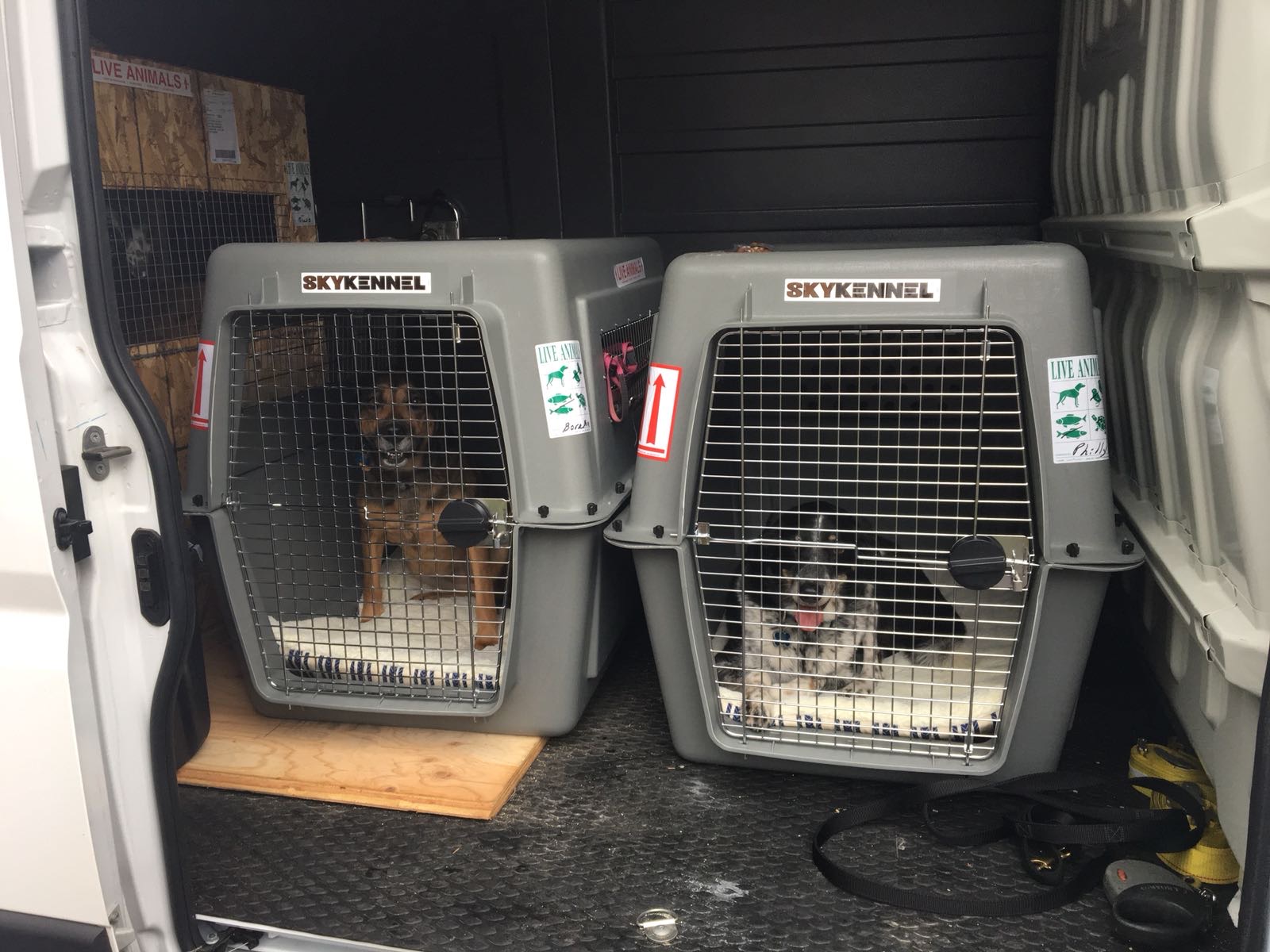

Since Lynn is a veterinarian and has signed many international health certificates and helped many people move their pets over the years, we honestly thought that this was a part of the process that we could manage ourselves, but we were wrong. We were frustrated that there were no direct flights from Chicago to Northern Italy. We looked into picking them up in Rome (more than a 10-hour drive), Zurich (5 hours), or Munich (6 hours), but the whole process was very confusing. In addition, we wanted the dogs to stay in Chicago with family for a few weeks while we spent the summer traveling throughout Italy while our household goods were being shipped. Since the dogs would not be traveling with us, it was even more confusing.
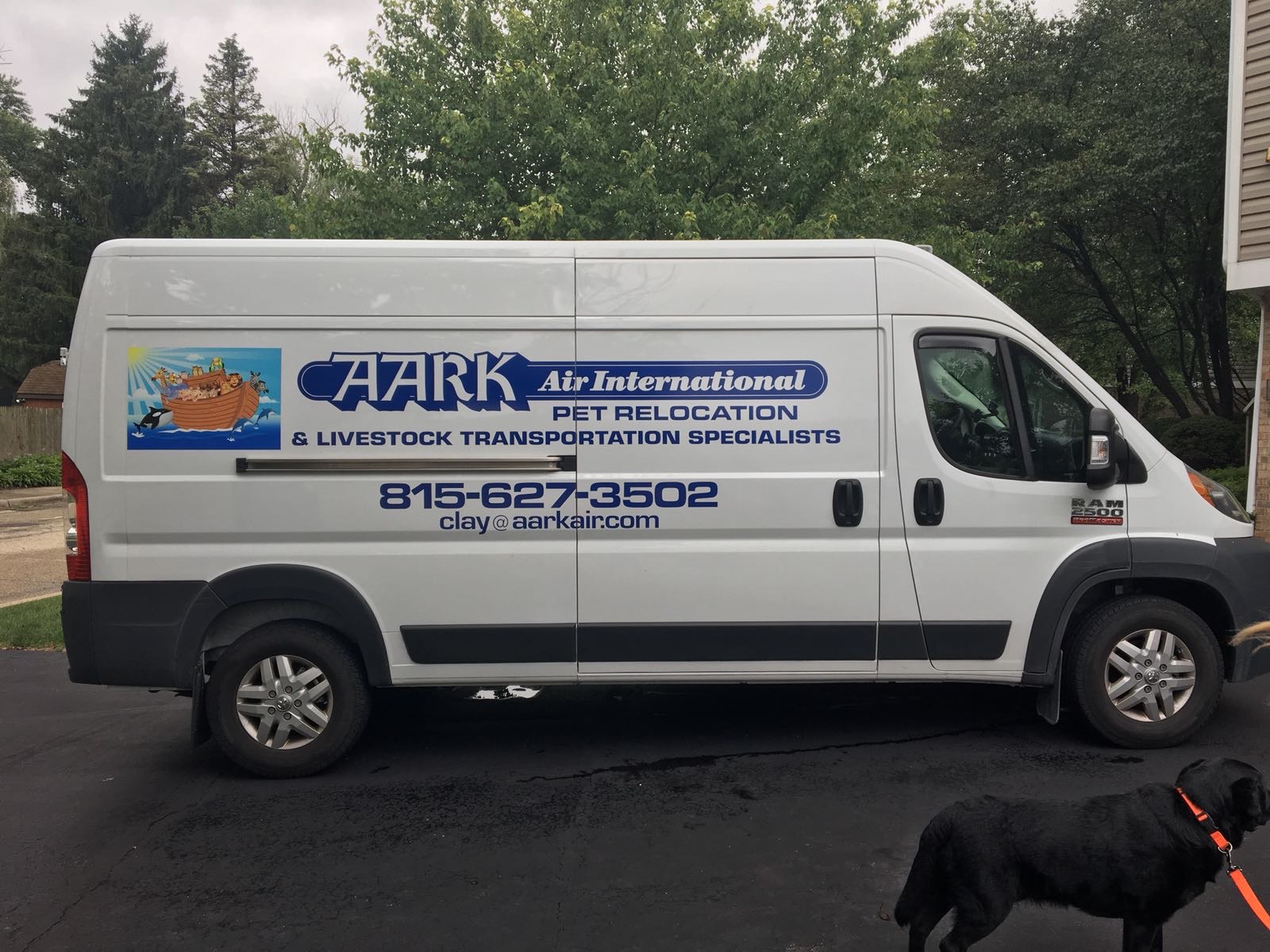
From our research, we learned that Lufthansa was the best international airline for shipping pets. They have an entire pet care center in the Frankfurt airport, which is where they would connect through to Milan. Lufthansa requires a professional pet moving service to organize the move (not an individual person). We received quotes from more than 5 different companies and honestly picked the most responsive and least expensive in the end. The company was Aark Air International (http://www.aarkair.com/). The total cost was about $3700 for both dogs and the owner of the company was very patient with all of my emails. We will not sugarcoat it…it was a really stressful experience. One of our dogs is very nervous and we were very worried about her, and their arrival in Milan was definitely one of the worst days of our lives. After they landed, the paperwork and confusion that ensued took hours until we were able to see them. It probably took both dogs about a week for them to fully recover. Worth it, but stressful. I wish we could figure out another way. We even looked at the Queen Mary cruise across the Atlantic, but the whole experience didn’t seem any better.
11. European medical care is supposedly free, do we need insurance?

Our Elective Residence Visa requires us to carry private health insurance for 100% of medical costs. We used Geo Blue Travel Insurance https://www.geobluetravelinsurance.com/. It’s about half the cost of our plan in the United States with a fraction of the deductible. It’s nice because it allows us to use either Italy’s public or private system and the private system is quite nice.
The insurance is still pricey for the family (our premium is $700 a month), and there is a way to sign up for the Italian health system (servizio sanitario nazionale) and get a health card (tessera sanitaria). We would still need private insurance to supplement this and satisfy the elective residence requirement, but there seem to be cheaper Italian-based options. There are so many details to figure out when living abroad and we probably could have saved ourselves quite a bit of money if we went this route, but we’ve just stayed with the GeoBlue insurance throughout.
It’s worth noting that all emergency care is free. We’ve used the emergency room three times since coming here (Kai’s broken arm, Lynn’s knee injury, and a COVID test for Joy) and didn’t pay anything or receive a bill.
12. Do we need Italian credit cards and bank accounts, transferring money?
After researching our options, we’ve found that using our US credit cards that do not have foreign transaction fees would be the best way to pay for things while we are in Italy. We carry the CapitalOne Venture card for most purchases and the Chase Sapphire Reserve card for restaurants and travel. For app and web-based purchases having a PayPal account is helpful. It’s good to have multiple card choices because Italian online transactions may reject your card on the first try (please don’t ask about the 45 minutes we spent online trying to buy tickets to a Juventus game).
Credit cards aren’t enough because Italy uses a lot more cash than we do in the US. To withdraw cash we have a CapitalOne 360 checking account because they don’t have ATM fees and don’t hide any fees by giving you a poor exchange rate. We’re just careful to use the right banks or the post office when withdrawing money so there are no fees on the other end.
Europeans also like to be paid directly to their checking accounts through a transfer. For example, this is how we pay our rent each month, make payments to the schools, and sometimes pay for travel excursions. We’ve found that Transferwise offers the best rates. It depends on the amount being transferred, but the fee is less than 1% of the transaction amount.
Originally we planned on using an Italian checking account to pay for our expenses and take money out of an ATM from our CapitalOne account and deposit into the Italian account. We did open an account through Intesa Sanpaolo but this really hasn’t been necessary. It is nice having the account to pay taxes (see below) and the Italian ATM card is the only reliable way to pay for gas. The self-service machines at the gas stations almost always reject our US credit cards, and we once put in too much cash (50 euros for 30 euros worth of gas) and there was no way to get change. Since there is a 9 euro a month fee for the checking account we probably would suggest skipping it and finding gas stations with attendants who do take credit cards or finding reliable stations that will give you change (or a credit towards your next purchase like at Q8 stations) if you overpay with cash. Who knew filling up your gas tank could be such an adventure?
13. Which providers should we use for our cell phones, internet, tv, utilities, and a VPN?
TIM is the largest cell phone and internet provider and the one that supposedly has the best reception in our area of Turin, so that’s who we use. It could just be our house but the connection is terrible, if you just stand still the phone goes from 4G to 3G to no service. So not only can we barely speak the language, but the calls are often interrupted or dropped. We hadn’t had a landline in the US for more than a decade, but we probably should have gotten one with our internet. Our internet is DSL with “blazing” fast download speeds up to 20 Mbps. It’s like living in the early 1990s. The cell coverage and fiber internet connection are better in the city, but it’s still behind the US. The good news is that we only pay 10€ per number per month, and the kids are cheaper with a student plan around 7€. The internet is around 40€ per month. Another company a lot of people use for mobile and internet is Fastweb. TMobile and Iliad are other cell options. Micso and Eolo are satellite internet providers to consider since they can offer speeds faster than DSL if you’re in an area without high-speed internet.
For communication purposes, we need to mention that WhatsApp and Viber are extremely helpful apps. Almost all Italians use WhatsApp rather than sending text messages, and it’s good for sending messages to people around the world. We use Viber when we need to call a landline outside of Italy, it has cheap international rates and it’s free when you call toll-free numbers.
We chose to upgrade over the basic tv options through an antenna and pay for a Sky satellite package. Just like cable in the US, it’s got sports, tv shows, and movie channels. You can pick from a variety of choices, we have the sports package to watch soccer across Europe and NBA basketball but no movie channels (we did a promotion where we paid 45€ per month during the first year, and now it’s 60€). Many of the programs that come from the US (like NBA games or tv shows – including HBO series that are included in the standard package) can be watched in the original English or dubbed with subtitles. We try to use the TV (and radio) as a way to practice our language skills.
Even with Sky and Netflix being available in Italy through our US account, we do use a VPN at times. We use VyprVPN and pay $80 per year to use it from all of our computers and phones. The speed is as fast as can be expected with our terrible internet speed, and it doesn’t get detected. The Netflix and Amazon libraries vary by country, so we often use it to watch US content. If we had HBO or Hulu accounts, these wouldn’t be available in Italy but the VPN would make it possible. Even when searching online you would be surprised how many websites won’t let you view their content from another country. From the Food Network to shopping sites to job boards, it really is surprising. Plus it adds security when working from a shared space like a coffee shop. It also came in handy when we were in Oman and they don’t allow the use of WhatsApp or Viber from within their country (even on wifi).
Our utilities were set up by our relocation company, so we’re not exactly sure about that process. But we do know that, along with gasoline, the cost of electricity and gas is much higher per unit than in the US. We have electricity and gas supplied by Iren. I’m not sure if consumers have a choice or not, but no matter who you use, it’s gonna be expensive. So plan on reducing your energy consumption. The weather is a lot better in Turin than Chicago, and we don’t have air conditioning or use a clothes dryer here, yet our utility bills are much higher. Insider tip: the rates are lower at night and on the weekends, so plan on running your washing machine on Sundays.
14. How do we pay taxes?
Even if you are a citizen of another country, you are considered a tax resident of Italy if you are living there for 183 days out of the year. This means you will need to pay taxes to Italy for income earned from work activities and investment activities (interest, dividends, and capital gains) even in accounts held in other countries. In the US we always did our own taxes with TurboTax, but this seemed too complicated and we didn’t want to get into any issues with the government, so we hired an accountant (commercialista) from Milan who was familiar with this process. There is no filing jointly with a spouse in Italy, so we had to file two returns. We paid around 500€ per return to the accountant. It seemed like a lot considering how little we earned and how simple our financials seemed to be compared to Chicago when Dave was running his own business out of the house.
The accountant provided us with an F24 form that tells how much tax you need to pay. You can take this to the post office and deal with long lines of Italians who do all of their transactions there, or you can simply pay online through an Italian bank (see above).
The good news is that the US and Italy have a tax agreement, and you can use any taxes you pay in Italy as a credit to the US so you are not double-taxed. We also worked with an accountant in the US (who had recommended the Italian accountant to us) to handle our US taxes.
In addition to income tax, we also had to pay an annual garbage tax (around 500€ paid through an F24 form on our bank’s site) and an annual tax for each car (around 200€ per car paid through the Automobile Club d’Italia’s website).
15. Do we need to maintain our US contact information (address, cell phone)?
Having a way for people to get in touch with you at a US address or cell phone, or to confirm that you are a US citizen, can be important. Since we sold our house in Chicago, we ended up using Lynn’s parents’ home for our address. Having a US address is a requirement for US banks, credit cards, and financial services, so it’s important to have an address for those reasons. Plus it meant we could vote in elections and to have a place for other random bits of mail that were being forwarded by the USPS after we moved.
We weren’t exactly sure how communication would be with an Italian cell phone number (see above) and if our friends from the US would be able to contact us without extra fees, so we decided to “park” our US cell phone numbers using Google Voice. For a $20 fee, we transferred our numbers from Verizon to Google Voice. Through the app, friends and family can still text us at those old numbers. If you pay extra fees you can also receive and make calls, but for free we can still receive voicemails. However, once we were in Italy it was easy to get everyone to message and call us through WhatsApp on our new numbers without any additional costs for us or them. And for the rare times that we need to call a landline, we use Viber. When we are permanently back in the US it will cost us $3 to transfer our number from Google back to a mobile service provider.
 The Avventura